
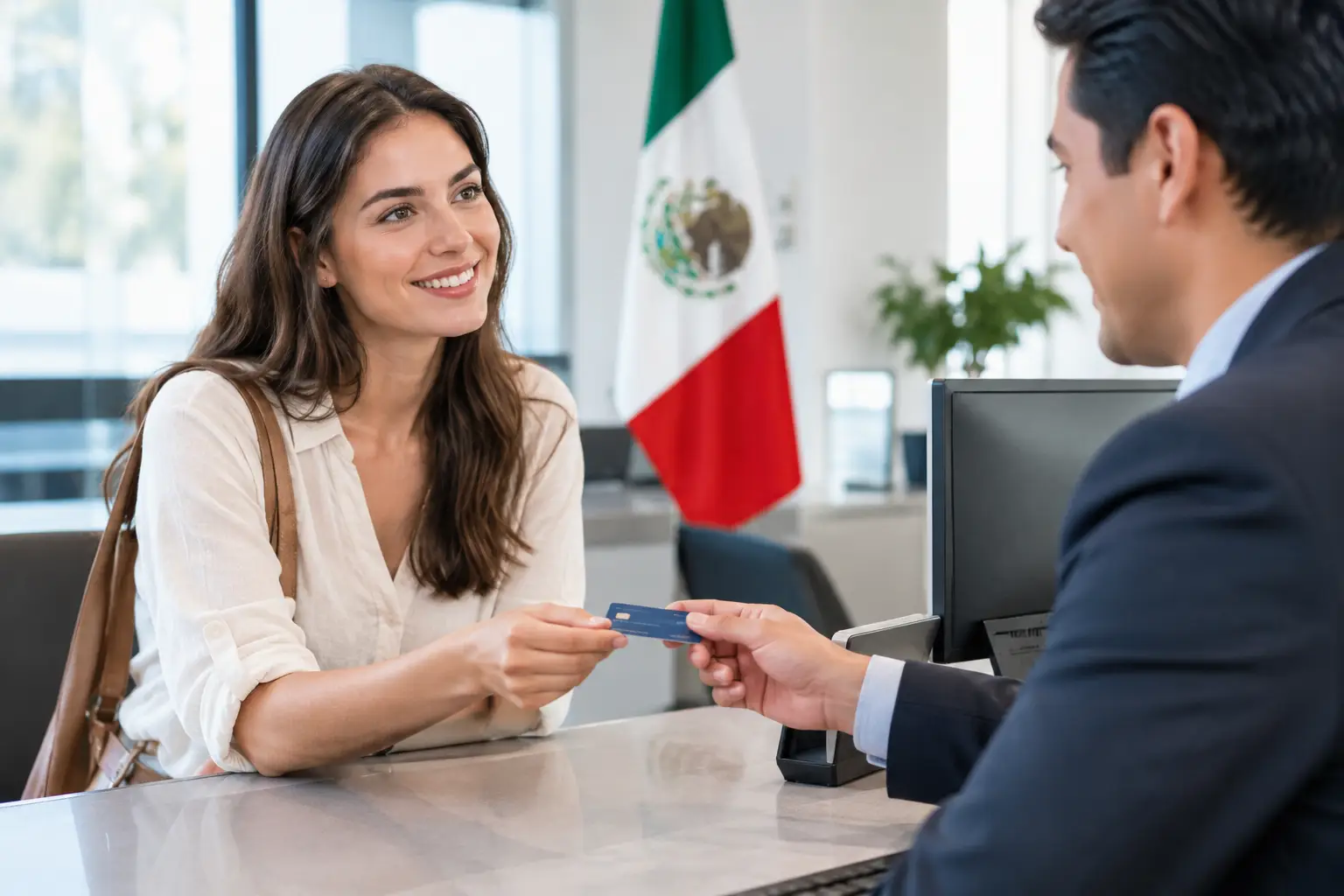
A Mexican bank account can make daily life feel much more settled. It gives you a practical way to pay rent, receive income, use local transfer systems, and avoid carrying large amounts of cash. But if you plan to open a bank account in Mexico as a foreigner, expect the process to be more personal and branch-dependent than opening an account in the United States.
The good news is that it is manageable when you prepare for it at the right stage of your move. The key is understanding what Mexican banks commonly ask for, why a tourist visit may not be enough, and how to avoid treating one bank employee's answer as the final word.
Start with your residency status
For most people relocating from the United States, opening an account becomes much easier after receiving temporary or permanent resident status in Mexico. Many banks want to see a valid residency card, rather than a passport and tourist permission alone.
Some branches may accept nonresidents or visitors for certain products, but policies can change and are often applied differently from one branch to the next. An account available to a visitor may also come with more restrictions, such as lower deposit limits or fewer banking features. If a bank says no, it does not necessarily mean you cannot bank in Mexico. It may mean that particular branch cannot open the account you need with the documents you have today.
For a long-term move, it is usually wiser to plan banking after residency is underway instead of making it an urgent first-week task. You can still use a US account, credit card, and cash withdrawals while you get established, although you will want to watch foreign transaction and ATM fees.
Documents banks commonly request
Requirements vary by bank, account type, city, and even the employee handling your application. Still, most foreign residents should be ready to bring an original and copies of the following:
- Your valid passport
- Your Mexican temporary or permanent resident card
- Proof of a Mexican address, often a recent utility bill, internet bill, or formal lease
- A Mexican phone number
- Your CURP, Mexico's personal identification number, if available
- An opening deposit, which can range from modest to more substantial depending on the account
Banks may also ask for your Mexican tax identification number, known as an RFC, especially if you are self-employed, own a business, expect to receive regular deposits, or need services beyond a basic personal account. Do not assume you must have every document before speaking with a bank, but do not assume a passport alone will carry the day either.
A common complication is proof of address. If you have just arrived, the utility bill may still be in a landlord's name or the previous tenant's name. Ask the bank in advance whether a lease, a landlord letter, or another document may be accepted. Bringing both your lease and a utility bill tied to the property can strengthen your file, even if neither document is perfect on its own.
Choose the account for the life you are building
Mexico has major national banks, regional options, and digital financial services. The best choice is not always the biggest name or the branch closest to your home. Think first about how you will actually use the account.
If you will pay local bills, receive pension deposits, transfer money to a landlord, or pay Mexican vendors, make sure the account supports SPEI transfers. SPEI is Mexico's widely used electronic bank transfer system. It is fast, common, and often far more practical than checks.
Ask whether the account includes a debit card, mobile banking access, transfer limits, monthly fees, minimum balance requirements, and charges for using another bank's ATM. If your income arrives from the United States, ask how the bank handles international incoming wires and whether the fees and exchange process fit your needs.
For remote professionals and entrepreneurs, the question becomes more specific. A personal account may be appropriate for ordinary household spending, but it may not be the right place to receive business revenue. If you will operate a Mexican business or invoice local clients, get qualified guidance on the correct account type and tax setup before money starts moving.
Expect an in-person visit and some patience
Opening an account in Mexico often means going to a physical branch, taking a number, presenting documents, and answering questions face to face. This can feel slow if you are used to verifying your identity online in a few minutes. It is not necessarily a warning sign. It is simply a different banking culture, with more emphasis on original documents and personal review.
Go early in the day and avoid scheduling the appointment right before another commitment. Bring multiple copies of your documents, along with your originals. If you are not comfortable conducting the conversation in Spanish, ask whether the branch has an English-speaking representative available. In places with established international communities, including Mérida, some branches may be more familiar with foreign residents. That familiarity can help, but it should never be assumed.
It can also help to ask a short list of direct questions before you commit: What documents are required for a foreign resident? Is there a monthly minimum? Can I use the app without a Mexican debit card already activated? What is the daily transfer limit? What happens if I need to replace my card?
Clear questions reduce surprises later, especially when a banking term is unfamiliar or translated imprecisely.
Be careful with cross-border transfers
A Mexican bank account does not automatically solve every US-to-Mexico money question. International wires can be useful for larger, planned transfers, but they may involve sending-bank fees, receiving-bank fees, intermediary charges, and currency conversion costs. Smaller recurring needs may call for a different approach.
Before transferring a large amount, send a smaller test transfer if possible. Confirm the account number format, the recipient name exactly as shown by the bank, the routing details required by your US institution, and any limits on incoming funds. A small mismatch can delay a transfer at the moment you need money for a lease deposit, a vehicle purchase, or household setup.
Keep records of major transfers, especially money used for real estate, immigration-related expenses, business activity, or tax reporting. US citizens and residents may also have US reporting responsibilities for foreign financial accounts. The rules depend on your circumstances, so a cross-border tax professional can help you understand your obligations before balances grow.
Build in accessibility and personal safety
A bank account is not only a financial tool. It is part of how safely and independently you can live in a new country. Choose a branch you can physically access, with reasonable parking, ramps, seating, and hours that work for you. If you are disabled, ask directly about accessible entrances and service accommodations rather than relying on an online listing.
Every household deserves clear, respectful service, including Black, Mexican, and other people of color, LGBTQ+ people, disabled movers, mixed-status families, and anyone who has felt dismissed by institutions before. If an interaction feels confusing, rushed, or disrespectful, you are allowed to pause, ask for a supervisor, try another branch, or bring a trusted bilingual support person.
Once your account is open, set up alerts, use strong passwords, and be cautious with unsolicited calls or messages claiming to be from your bank. Mexican banking scams often rely on urgency. A legitimate concern can be verified through the phone number printed on your card or by visiting a branch.
Do not let banking hold up your move
It is easy to treat a bank account as the first sign that your new life is official. In reality, it is one piece of a larger sequence: residency, housing, local phone service, healthcare planning, tax considerations, and daily routines. For some movers, opening an account happens quickly. For others, it takes a few branch visits and one missing document.
That does not mean your plan is off track. Prepare your paperwork, leave room in your timeline, and make decisions based on your real financial needs rather than pressure to do everything immediately. A calm move to Mexico is built one clear, workable step at a time.