
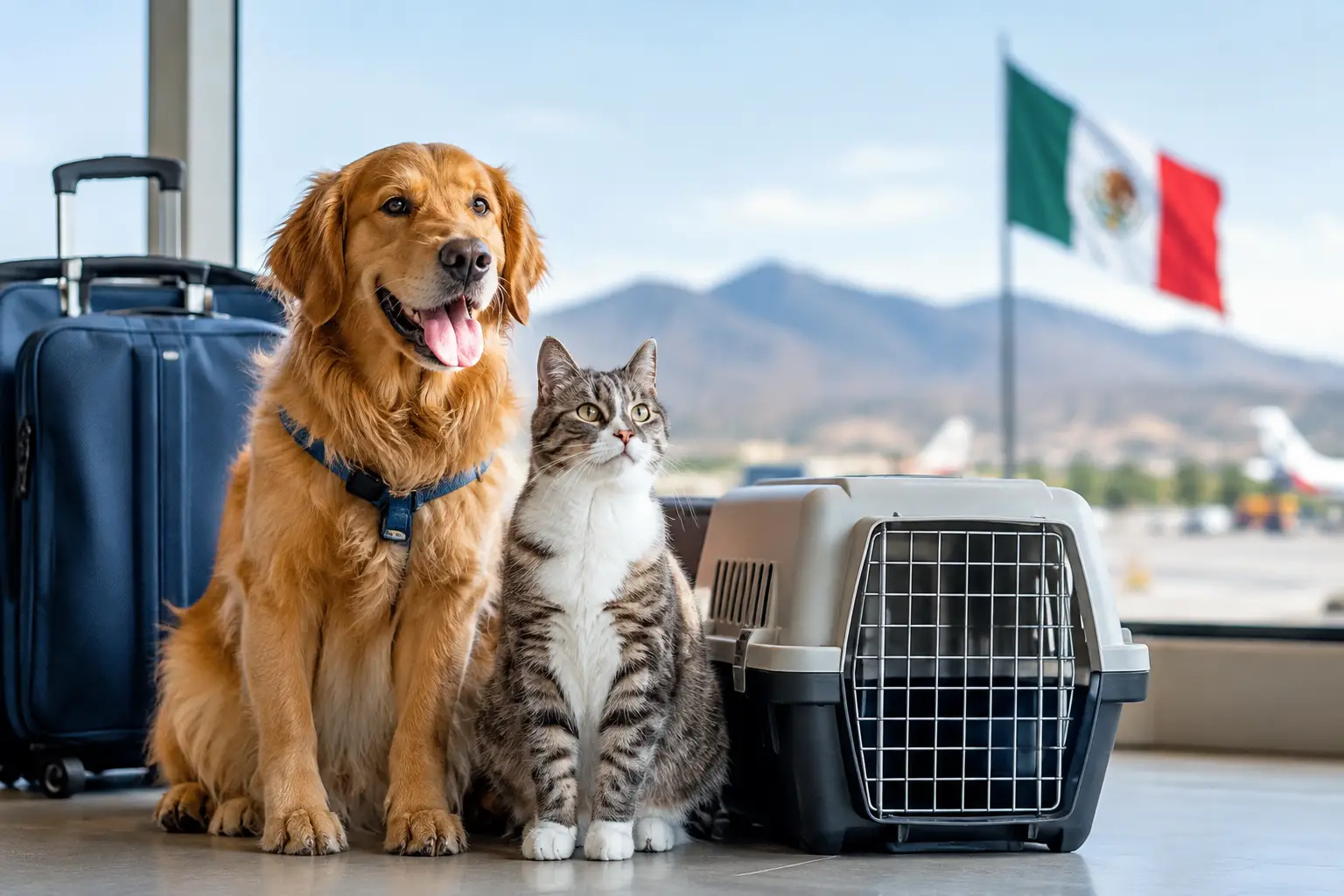
Your dog has no idea why the suitcases are out, and your cat is unlikely to appreciate a conversation about border paperwork. But getting the details right before travel can protect your pet from a stressful delay at the airport or land border. Understanding moving pets to Mexico requirements early gives your household room to make calm decisions instead of scrambling during the final week.
For most people relocating from the United States with a personal dog or cat, Mexico's entry process is manageable. The key is separating Mexico's animal-health entry rules from your airline's policies and the requirements for returning to the United States later. Those are related, but they are not the same thing.
Moving Pets to Mexico Requirements at a Glance
When you arrive in Mexico, dogs and cats traveling as personal pets are generally inspected by Mexico's animal-health authority, SENASICA. The inspector is looking for a healthy animal, a clean carrier, and signs of external parasites such as fleas or ticks. If the inspection goes well, you receive an Animal Health Import Certificate, typically at no charge.
Mexico generally does not require a formal veterinary health certificate for a personal dog or cat arriving from the United States in the way many travelers expect. That said, your airline may still require one. Airlines set their own standards for in-cabin and cargo travel, often including deadlines for when a veterinarian must sign the certificate. Always treat the airline's rules as a separate part of your travel plan.
Bring your pet's current vaccination record, particularly proof of rabies vaccination, even when it is not requested at the Mexican inspection desk. It is sensible backup for the airline, a veterinarian in Mexico, a boarding provider, or a future return trip. Keep a paper copy in your carry-on and a clear digital copy on your phone.
At the border or airport, expect the carrier to be clean and free of bedding, toys, food, or other loose material that could complicate inspection. A small amount of dry food for the trip may be practical, but do not assume that a large supply of pet food will be allowed through. Commercially packaged food is usually easier to explain than an open bag, and regulations can vary by ingredient and quantity.
Start With Your Travel Method
The paperwork is only one part of moving with an animal. The travel method often determines what preparation matters most.
If you are flying, reserve your pet's place as soon as you book your own ticket. In-cabin pet spaces are limited, and not every flight, aircraft, or route accepts pets. Confirm the permitted carrier dimensions, combined pet-and-carrier weight limit, fees, breed restrictions, and required documents directly with the airline. A pet accepted on one leg of an itinerary may not be accepted on a partner airline or a small regional connection.
Driving gives you more control over breaks, temperature, and the pace of the journey. It also requires an honest assessment of your pet's tolerance for long car days. Plan pet-friendly overnight stops in advance, keep water accessible, and never leave an animal in a parked vehicle in warm weather. If you are entering through a busy land crossing, build extra time into the day so your pet is not waiting in a hot car while you sort out logistics.
Cargo transport can be appropriate in limited circumstances, particularly for larger dogs that cannot travel in cabin. It also introduces more variables, including weather embargoes, crate standards, check-in timing, and handling procedures. Ask detailed questions before committing. For an older pet, a flat-faced breed, or an animal with anxiety or respiratory concerns, speak with your veterinarian about whether the route and season are appropriate.
Prepare Your Pet's Records Before Moving Day
A simple, well-organized pet folder prevents a lot of last-minute uncertainty. Include vaccination records, your veterinarian's contact information, recent medical history, prescriptions, and a photo of your pet. If your pet has a microchip, record the chip number and make sure the registration information is current.
Microchips are strongly recommended even if they are not the central Mexican entry requirement for your particular trip. A new country, an unfamiliar home, and an open door during move-in can create a real risk of separation. A collar with an ID tag is still useful, but a microchip provides a more permanent form of identification.
Before departure, schedule a veterinary visit with enough time to respond if your pet needs a vaccine update, parasite treatment, medication refill, or a travel letter for the airline. Ask your veterinarian about the climate where you are moving. In Mérida and the Yucatán, for example, year-round heat, mosquitoes, ticks, and other parasites call for a thoughtful preventive-care plan. What worked in a cooler part of the United States may need adjusting.
Do not sedate a pet for air travel unless a veterinarian specifically advises it. Sedation can affect breathing and balance at altitude, and many airlines discourage it. Carrier practice, familiar bedding at home before the trip, and a gradual travel routine are usually safer ways to reduce stress.
Think Ahead to Your Return to the United States
Many movers focus on entry into Mexico and overlook the U.S. return rules. Even if you are relocating rather than planning a quick visit home, those requirements matter. You may need to travel back for family, work, healthcare, or an unexpected emergency.
For dogs entering the United States, federal rules can include a minimum age, a microchip, a completed CDC Dog Import Form, and a dog that appears healthy on arrival. Requirements can change based on where the dog has been during the previous months and whether that country is considered high risk for dog rabies. Additional state rules, airline policies, and destination-specific rules may also apply.
Cats are generally subject to fewer federal entry requirements when returning to the United States, but states and airlines may have their own vaccination or documentation standards. Check the current rules close to each trip rather than relying on an old blog post, a neighbor's experience, or a rule that applied to a different route.
This is also a good reason to establish care with a Mexico-based veterinarian soon after you settle in. They can keep records current, recommend local preventives, and help you obtain documentation if future travel requires it.
Service Animals and Support Animals Need Separate Planning
A trained service animal and an emotional support animal are not treated the same way by airlines or border authorities. Airlines may have separate forms and behavior, health, or training requirements for service animals. Emotional support animals are commonly handled under standard pet policies instead.
If you or someone in your household is disabled and travels with a service animal, contact the airline well before departure and ask for its current process in writing. Confirm any accessibility assistance you need for check-in, security, connections, or border inspection. Planning ahead is not an inconvenience or a special favor. It is part of making the trip workable and dignified.
A Calm Pre-Departure Check
In the final week, confirm these practical details:
- Your airline or driving route, border crossing, and pet reservation are confirmed.
- Your pet's vaccination record, any airline health certificate, and medical records are printed and saved digitally.
- The carrier meets the airline's size rules and has been tested at home.
- Your pet has an ID tag, current microchip registration, water plan, medication, and enough food for the travel day.
- You have checked current Mexican entry guidance and U.S. return requirements for your specific pet and route.
Rules can change, and individual inspectors or carriers may ask reasonable questions based on what they see. That does not mean the process has gone wrong. It means you are crossing an international border with a living family member who deserves careful handling.
Whether you are a retiree traveling with an elderly cat, a family moving with two rescue dogs, a remote worker relocating with a service animal, or part of a Black, Mexican American, LGBTQ+, or other community building a life in Mexico, the goal is the same: arrive with your pet safe, documented, and ready to settle in. A little structure before departure leaves more room for the moment that matters most - opening the door to your new home together.