
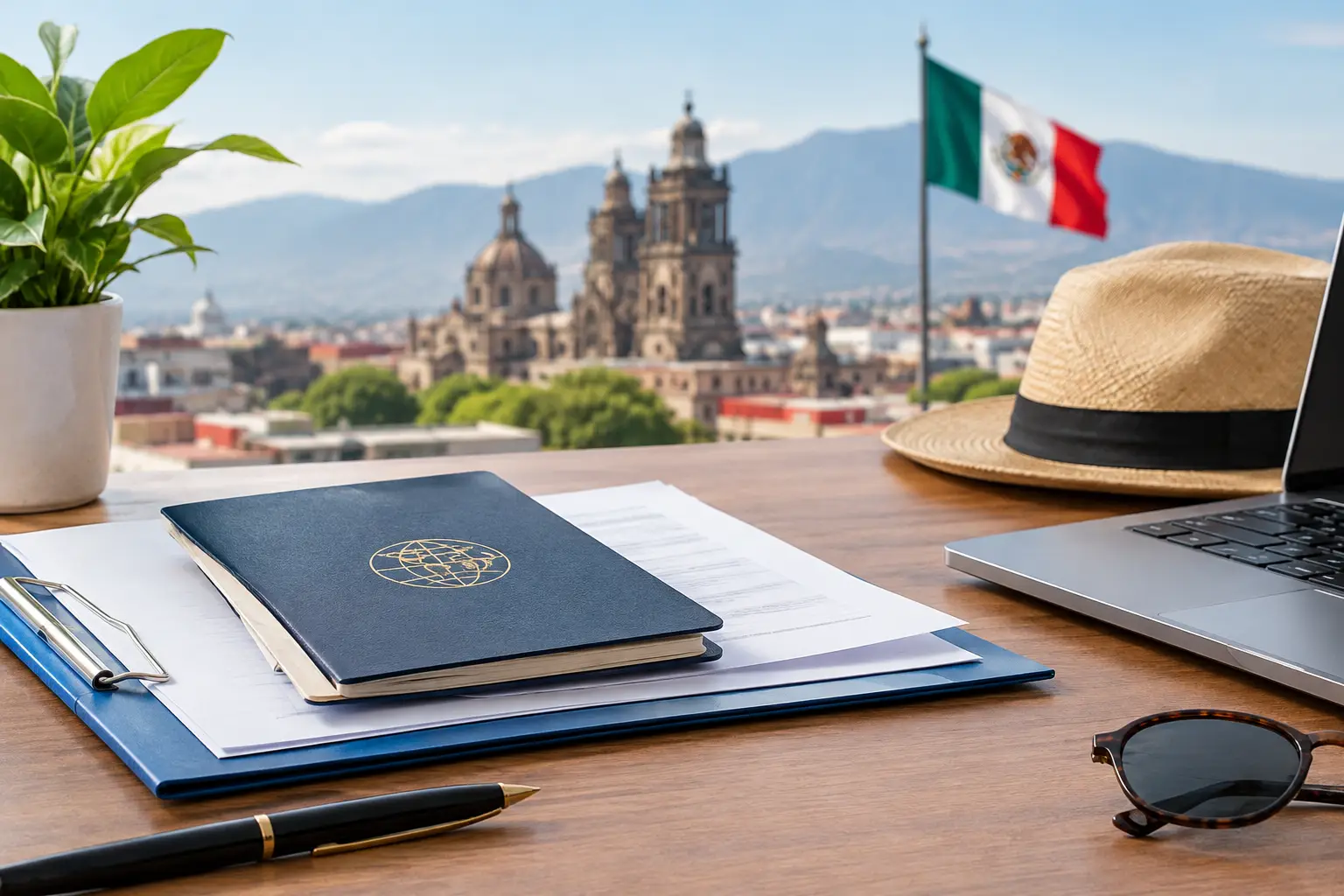
A move can feel real the moment you start collecting birth certificates, bank statements, and passport photos. That is also when Mexico paperwork can begin to feel bigger than the move itself. The good news is that most document stress comes from trying to handle everything at once, or gathering records before you know which ones actually matter.
A calmer approach is to build your paperwork in stages: first the documents needed to enter and establish legal residency, then the records that make daily life easier once you arrive. Requirements can change, and each household has its own circumstances, but a well-organized file gives you room to make decisions without panic.
Start with your residency path
For many Americans planning a long-term move, residency is the document process that shapes everything else. Mexico generally offers temporary residency for people who plan to live in the country for more than six months, and permanent residency for qualifying applicants, often retirees or people who meet higher financial thresholds.
The specific financial requirements, appointment practices, and supporting documents can vary by Mexican consulate in the United States. That means advice from a friend in Arizona may not match the process at the consulate serving you in Texas, California, or elsewhere. Confirm the current requirements directly with the consulate where you will apply before ordering documents or booking travel.
In many cases, the process starts at a Mexican consulate in the United States. After approval, you enter Mexico with a residency visa and complete the process with immigration in Mexico within the required time frame. Missing that second step can create avoidable trouble, so do not treat the visa in your passport as the final document.
Your core residency file will commonly include a valid passport, application forms, passport-style photos, proof of financial solvency or another qualifying basis, and evidence supporting your application. If you are applying through family ties, employment, or property, the supporting records will differ. Keep copies of every submitted page, every receipt, and every approval.
Build one Mexico paperwork file, not a pile
Paperwork becomes manageable when it has a home. Use a secure digital folder with clear file names, plus a physical folder you can carry when traveling. Scan records in color, save them as readable PDFs, and back them up somewhere you can access from Mexico if your phone or laptop is lost.
Your folder should include the basics: current passports, birth certificates, marriage certificates or divorce decrees when relevant, Social Security and tax records, and proof of address. If your legal name has changed, include the documents that create a clear line from the name on your birth certificate to the name on your passport and financial accounts.
For a couple, do not assume one person’s approved application covers every later task. Each adult will need their own identification and immigration records for many services. For families, bring records for every child, including custody documentation when it applies. Blended families, single parents, same-sex couples, and households with different last names may need additional documents to show legal relationships. That is not a reflection on your family. It is simply a reason to prepare a clear paper trail before you leave.
Originals, certified copies, and translations
An original document, a certified copy, and a scanned copy are not interchangeable. A Mexican office may ask for an original even when you have emailed a scan in advance. Keep originals protected, and carry copies separately during travel.
Some US public records must be apostilled before they can be accepted in Mexico. An apostille is a certification used between countries that verifies the signature or seal on a public document. It does not certify that every fact in the document is true. Whether you need one depends on the procedure and the office handling it, so ask before paying for apostilles on every record you own.
Spanish translations may also be required. When a formal translation is needed for a Mexican authority, it may need to be completed by a translator recognized in Mexico, rather than any bilingual friend or US translation service. Do not translate documents prematurely if the receiving office has specific formatting rules.
Separate arrival documents from life-in-Mexico documents
Residency paperwork gets the attention, but your first months in Mexico involve several different systems. Banking, leasing, health care, school enrollment, utilities, driving, and tax registration do not all use the same documents. Thinking in categories prevents one missing item from stalling your plans.
For housing, landlords or property managers may ask for identification, residency documentation, proof of income, references, and a local guarantor or alternative deposit arrangement. Rental practices vary widely by city and property. In Mérida, for example, a well-prepared renter may still encounter different expectations from one owner to the next.
For financial life, keep US bank statements, proof of income, and records showing the source of larger transfers. A Mexican bank may have its own account-opening requirements and may ask for a residency card, CURP number, Mexican address, or proof of address. A CURP is a Mexican population identification number that residents often receive through the immigration process. It becomes useful for many administrative tasks, but you may not have it on day one.
For work or business activity, tax paperwork deserves early attention. Your immigration status, the source of your income, whether you work for a foreign employer, and whether you operate a business in Mexico can all affect what you need to do. An RFC is the Mexican taxpayer registration number. Do not assume that being paid into a US account means Mexican tax obligations do not apply. Cross-border tax questions are personal and worth reviewing with qualified professionals who understand both countries.
Prepare for the parts that are easy to overlook
A few records are easy to leave until later because they do not seem urgent. They become important quickly when you need a doctor, enroll a child, renew a prescription, or respond to an emergency.
Bring a concise medical summary for each member of your household. Include diagnoses, medications by generic name, allergies, vaccination records, insurance details, and contact information for US providers. If you use mobility equipment, communication supports, assistive technology, or ongoing specialist care, prepare a short document explaining your needs and the equipment specifications. This can make conversations with airlines, clinicians, landlords, and local service providers much clearer.
If you are moving with children, gather school transcripts, report cards, immunization records, special education plans when applicable, and letters that describe learning accommodations. Schools may have different enrollment calendars and documentation standards, so having a complete history helps you compare options without rushing.
Pet owners should start earlier than they expect. Airline rules, health certificates, vaccination records, and import requirements can depend on the animal, the route, and the date of travel. Keep pet documents separate from your own file, with digital copies available during transit.
If you plan to bring a vehicle, pause before assuming it belongs on the moving checklist. Rules around temporary vehicle importation, regional restrictions, insurance, and residency status can be complicated. For many people moving to Yucatán, buying or leasing locally after arrival may be simpler than importing a US vehicle. The right choice depends on where you will live, how often you will drive, and whether you need an accessible vehicle or specialized modifications.
Create a timeline that leaves room for real life
Do not wait until your final month in the United States to request every document. Birth certificates, court records, apostilles, consular appointments, and financial statements can all take longer than expected. Start the records that are hardest to replace first, especially documents held by another state, a former employer, a school, or a court.
About three to six months before your target move date, confirm your residency route and consulate requirements. Begin gathering financial evidence and civil documents, check passport expiration dates, and identify any records that may need apostilles. In the final month, print key confirmations, make fresh copies of bank statements if needed, and place essential originals in your carry-on rather than checked luggage.
After arrival, prioritize the deadlines attached to your immigration process. Then take the next tasks in order: a stable address, local phone access, banking if needed, health care arrangements, and tax or work registration where applicable. You do not need every administrative detail completed in your first week. You do need to know what has a deadline and what can wait.
Get guidance before a document problem becomes a move problem
There is a difference between getting organized and trying to become your own immigration office, tax adviser, translator, school administrator, and property manager. General checklists are useful, but they cannot account for a prior marriage, a dependent child, an ongoing medical need, a business plan, or an unusual income source.
This is where locally informed support can save time and emotional energy. Hola Movers helps people turn a Mexico move into a sequence of understandable decisions, with practical guidance grounded in the realities of settling in Mexico. The goal is not to make paperwork disappear. It is to make sure it no longer controls the pace of your move.
Keep your documents accurate, current, and easy to find. Then give yourself permission to handle the next form when it is actually time for the next form. Your move to Mexico can be calm and clear, one well-prepared page at a time.