
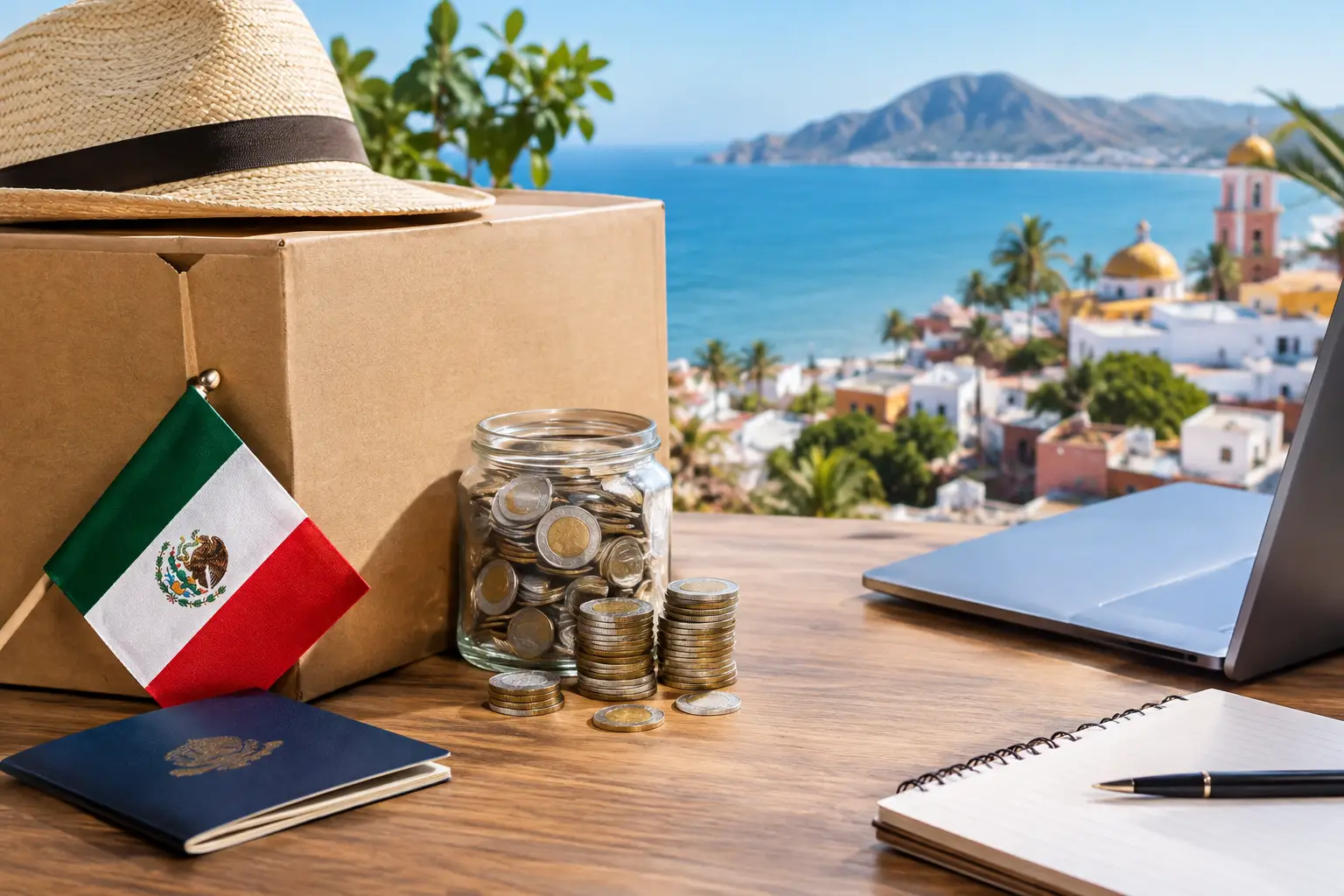
A move to Mexico can cost less than many people expect, but the first few months rarely feel inexpensive. Before you benefit from lower day-to-day costs, you may be paying for flights, residency paperwork, housing deposits, temporary lodging, and the practical work of starting over in a new country.
So, how much does it cost to move to Mexico? For one person, a modest, well-planned move may require roughly $6,000 to $12,000 in accessible savings before departure. A couple often needs $10,000 to $20,000 or more. Families, pet owners, people shipping a household, and anyone moving with a vehicle should plan for a larger cushion.
Those are planning ranges, not a promise. Your destination, household size, income source, medical needs, and comfort level will shape the real number. The goal is not to find one perfect figure. It is to build a budget that leaves room for choices and surprises.
What your move to Mexico actually costs
The cost of relocating has two parts: the one-time expenses required to get settled and the monthly cost of living once you arrive. Keeping them separate makes the decision much clearer.
A person who arrives with only a few suitcases, rents a furnished apartment, and chooses a lower-cost city will have a very different budget from a family shipping furniture to Mérida or a remote professional setting up a home office in Mexico City.
Residency and document costs
Many Americans begin with temporary residency, which can allow you to live in Mexico without repeated tourist-border runs. Requirements vary by Mexican consulate and by residency category, but applicants generally need to show qualifying income or savings.
Government fees for visas and residency cards are usually measured in hundreds, not thousands, of US dollars. The larger cost is often the preparation around them: obtaining certified copies, apostilles, translations when needed, travel to a consulate, and professional help if your case has complications. A realistic planning range is $300 to $1,000 for straightforward paperwork and government fees, or $1,500 to $3,500 or more if you hire relocation or legal support.
Do not confuse proof-of-income requirements with the fee to apply. Mexico may ask you to demonstrate financial means, but that money is generally evidence that you can support yourself, not a payment to the government.
Flights, pets, and the first place you sleep
One-way flights from the United States to Mexico can range from under $200 to $700 or more per person, depending on your departure city, season, baggage, and destination. Add checked bags, pet transport, airport transfers, and one or two nights in a hotel, and a couple can easily spend $1,000 to $2,500 before reaching their longer-term housing.
Pets deserve their own budget line. Airline fees, veterinarian visits, health certificates, carriers, and possible ground transportation can bring the cost to several hundred dollars per pet. Emotional support should be part of the plan too. Moving with an older animal, a service animal, or a pet with ongoing medical needs can require more time and more careful coordination.
Shipping your belongings
Shipping is the category with the widest range. If you are bringing luggage only, your cost may be limited to airline baggage fees and a few replacement purchases after arrival. If you are moving boxes, furniture, artwork, office equipment, or a full household, costs rise quickly.
A small cross-border shipment might cost $2,000 to $5,000. Larger household moves can reach $8,000 to $15,000 or more, especially when packing, insurance, customs handling, and delivery are included. Imported household goods may also face rules and paperwork that affect what makes sense to bring.
For many movers, selling bulky furniture in the US and renting furnished housing in Mexico is the calmer financial choice. It is not right for everyone. Families with children, people with mobility equipment, and those who need specialized work or medical items may reasonably decide that shipping is worth the expense.
The housing number that catches people off guard
Rent may be lower than in many US cities, but move-in costs still arrive all at once. Landlords commonly request the first month of rent plus a security deposit. Depending on the property and local practice, you may also encounter an additional deposit, a guarantor arrangement, or fees connected to a lease.
In Mérida, a comfortable furnished one-bedroom apartment might fall around $700 to $1,300 per month, while larger homes and highly sought-after neighborhoods can cost significantly more. In Mexico City, Los Cabos, Puerto Vallarta, and other high-demand locations, comparable housing may cost more than first-time movers expect.
Plan for two to four months of rent available at move-in, plus temporary lodging while you search. That can mean $2,500 to $6,000 for an individual or couple in a mid-priced market, and more in a premium destination.
Housing decisions should also account for access, not only aesthetics. A beautiful colonial home with uneven sidewalks, steep stairs, or unreliable water pressure may not work for a disabled mover, an aging parent, or a household with young children. Neighborhood fit matters for Black, Mexican, Indigenous, LGBTQ+, disabled, and other marginalized residents as well. Ask practical questions about community, transportation, safety, language access, and how welcome you feel in daily life. The lowest rent is not always the best value.
A realistic first-month setup budget
Even a furnished home needs things. You may need a local SIM card, internet installation, groceries, kitchen basics, linens, a water filter, fans, transportation, and deposits for utilities. If you work remotely, include a backup internet option and any equipment needed to protect your income.
For a single person, $800 to $2,000 is a reasonable first-month setup allowance beyond rent. A couple or family may need $1,500 to $4,000, particularly if they are furnishing an unfurnished place or enrolling children in school.
Healthcare is another personal variable. Some residents pay out of pocket for routine care, while others purchase private insurance or use a mix of options. Monthly premiums and coverage differ widely by age, health history, and location. If you rely on prescriptions, specialist care, mobility devices, or regular treatment, budget for an initial medical planning trip or additional coordination before moving.
How much should you save before moving to Mexico?
Rather than aiming for the lowest possible move-in number, aim for a landing fund that gives you time to make good decisions. A useful target is your one-time relocation budget plus three to six months of living expenses.
For a single adult living simply in Mérida or another lower-cost city, that might mean $10,000 to $15,000 in total savings. For a couple, $15,000 to $25,000 provides more breathing room. Families and households with complex needs may want $25,000 to $40,000 or more.
That cushion is not a sign that Mexico is unaffordable. It is what protects you from making rushed choices because a lease is ending, a shipment is delayed, a residency appointment moves, or the first apartment is not right.
Costs people often forget to include
A cross-border move has small expenses that can become meaningful together. Think bank fees, currency conversion, phone plans, document copies, notary services, transportation to appointments, school supplies, replacement electronics, and short trips back to the US.
Taxes deserve attention as well. Living in Mexico can affect how you report income, especially for remote workers, business owners, retirees with multiple income sources, and people earning from US clients. Set aside funds for qualified tax advice instead of treating it as an afterthought.
If you own a home in the US, add the cost of managing it, selling it, or keeping it. If you plan to buy property in Mexico, treat that as a separate financial project from your initial relocation. Renting first gives many people the space to learn a city before making a major commitment.
Ways to keep the move affordable without making it harder
The most reliable savings often come from timing and scope. Travel light at first, rent before you buy, avoid signing a long lease from abroad, and leave room to learn what you truly need in your new city. A short exploratory visit can cost money upfront but prevent much more expensive decisions later.
It also helps to separate urgency from importance. You do not need to furnish your ideal home in week one or solve every administrative task in a single month. Focus first on legal status, housing, income, healthcare access, and a dependable way to communicate.
A move to Mexico is a financial decision, but it is also a life transition. The best budget is one that gives you enough structure to arrive steady, ask better questions, and make your next decision from a place of confidence rather than pressure. Your move to Mexico can be made calm and clear when the numbers support the life you are building.