
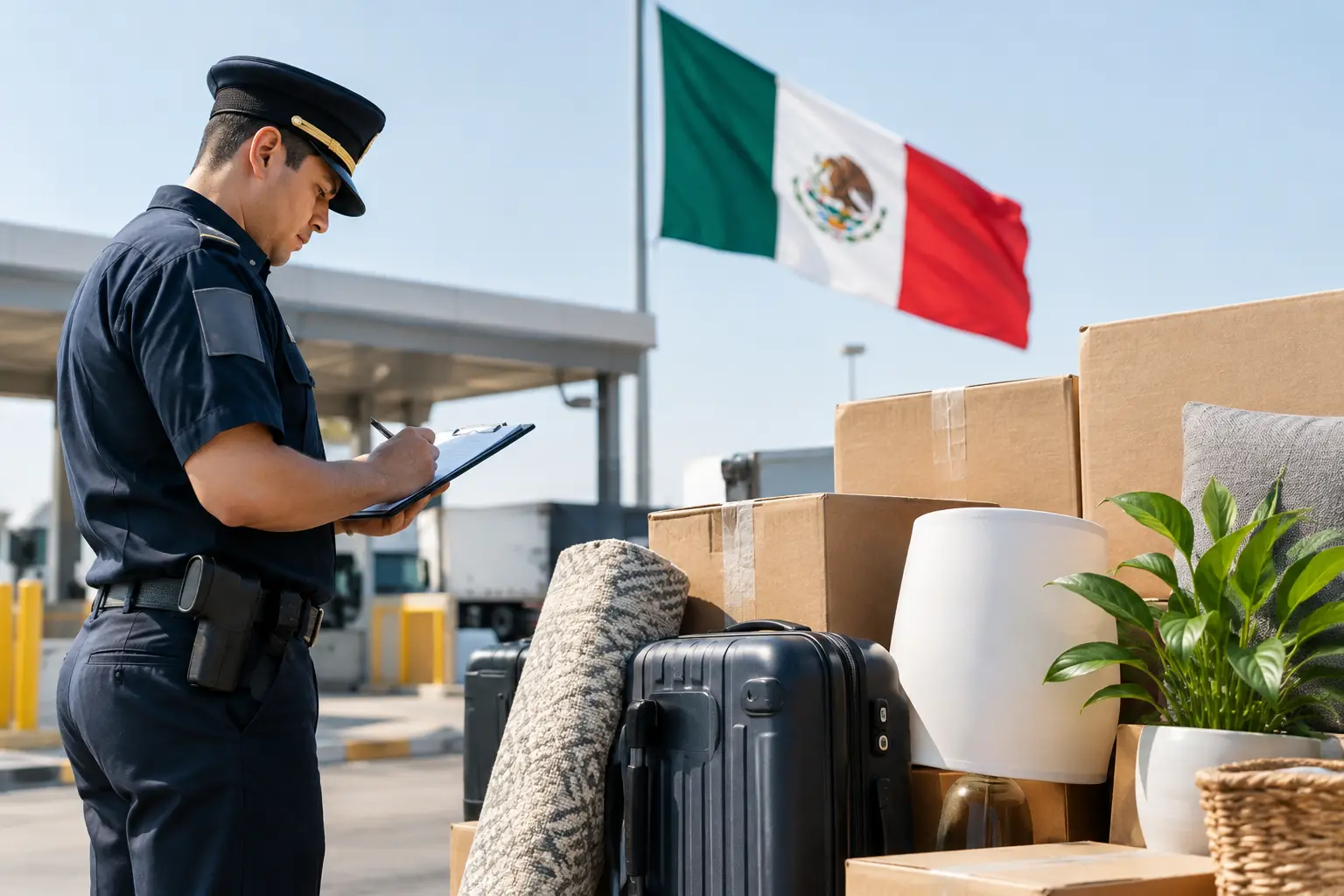
A box can look ordinary until it reaches the border. Your favorite cookware, a desk used for remote work, a child’s bicycle, or mobility equipment may all be part of a normal home move. Under Mexico customs rules for household goods, though, the paperwork and timing behind those items matter as much as what is inside the box.
For many people relocating from the United States, the relevant process is called a menaje de casa - an official household-goods inventory used to bring personal belongings into Mexico. Done correctly, it can allow qualifying residents to import used household goods without paying import duties. Done casually, it can create expensive delays, storage charges, or a shipment that cannot be released when you need it.
The good news is that this is manageable. The key is to treat your household shipment as an immigration-and-customs process, not simply a moving-truck booking.
What Mexico Customs Rules for Household Goods Cover
A menaje de casa generally covers the used personal items that make up a household: furniture, clothing, kitchenware, books, linens, appliances, artwork, and similar belongings intended for your own home in Mexico. It is designed for people establishing residence, not for stockpiling items to sell or furnishing multiple rental units.
Your shipment needs to be consistent with a real household move. A reasonable number of beds, chairs, computers, televisions, and kitchen items is usually easier to explain than several new, boxed versions of the same product. Customs officials and brokers look at the overall picture: your immigration status, inventory, shipment contents, and whether the goods appear to be for personal use.
A menaje de casa is not a blank check for everything you own. Vehicles follow their own import rules. Alcohol, tobacco, firearms, ammunition, food, plants, medications, and valuable or restricted items can trigger separate requirements. Some items may be prohibited or require permits, even if they have been in your U.S. home for years.
Start With Your Residency Status
Your Mexican immigration status is the foundation of the process. Most foreign nationals importing household goods under a menaje de casa do so in connection with temporary or permanent resident status. The exact documents accepted, timing rules, and consular steps can depend on your circumstances and the Mexican consulate handling your application.
A tourist entry is not the same thing as residency. If you are still researching Mexico, renting for a few months, or entering as a visitor while your residency is pending, do not assume you can ship your full household duty-free. Shipping first and sorting out immigration later is one of the costliest mistakes a mover can make.
For many households, the process begins with a Mexican consulate in the United States. The consulate may issue or certify the household-goods documentation needed for customs clearance. Requirements can change, and different consulates can have practical preferences about inventory format, copies, appointments, and translations. Confirm the current instructions directly with the consulate serving you before you finalize your shipment.
Timing matters too. There are often deadlines connected to the date your residency documentation is issued or activated. Those windows are not something to guess at. A relocation plan that works beautifully on paper can fall apart if the truck or container arrives before your documents are ready, or after your eligible import window has closed.
Build an Inventory That Matches Real Life
Your inventory is not a packing afterthought. It is the document that tells Mexican customs what you are importing. It should be clear, complete, and believable.
List items by category, quantity, and plain description. “Used household goods” is too vague. “Used queen bed frame, used mattress, used dining table, six used dining chairs” is much easier for a broker and customs official to understand. Include serial numbers for major electronics when requested, particularly computers, televisions, and higher-value equipment.
Keep the descriptions practical. You do not need to assign a sentimental history to every mug, but you should not hide items inside vague categories either. If you are bringing a home office, list the desk, chair, monitors, printer, and computer equipment. If you are moving with children, note their furniture, toys, books, and bicycles. If you use a wheelchair, medical bed, hearing device, adaptive kitchen tool, or other accessibility equipment, make sure it appears clearly on the inventory and discuss it early with your mover or customs broker.
Many families have mixed households: a U.S. citizen and Mexican spouse, a Black family returning to a familiar community, Mexican Americans reconnecting with family, LGBTQ+ couples, disabled movers, multiracial families, or friends sharing a home. The customs process can feel impersonal, but your household is not unusual because it does not fit a narrow picture of who moves to Mexico. What matters is having documents that accurately reflect your legal status and the belongings you are importing.
Avoid adding brand-new, unopened items unless you have confirmed how they should be handled. New goods can look commercial and may be assessed differently from used personal possessions. The same caution applies to multiple identical electronics, professional tools in large quantities, or inventory that could reasonably be resold.
Choose Your Shipping Plan Before You Pack
There is no single best method for every move. A shared truckload can make sense for a smaller household moving to Mérida or elsewhere in Yucatán, while a dedicated truck or container may suit a larger home. Air freight is faster but usually makes financial sense only for essentials. Each method affects cost, timing, and how much control you have over the customs process.
Before signing with a mover, ask who will handle Mexican customs clearance, whether a licensed customs broker is involved, what documents they need from you, and what happens if the shipment is held. Ask for costs in writing, including potential storage, inspection, port, transfer, and delivery charges. A low quote that leaves customs handling vague is not necessarily a low-cost move.
Do not pack your residency documents, original inventory, prescriptions, financial records, laptops, jewelry, or irreplaceable personal items into the household shipment. Keep essential documents and immediate-use belongings with you. Your shipment can be delayed for reasons that have nothing to do with your preparation, from a routine inspection to a scheduling issue at the border.
Common Problems That Create Delays
The most common issue is a mismatch between documents and reality. An inventory says “one television,” but the shipment contains three. A person applies for residency but ships before the status supports the import. A household sends a container to Mexico without confirming who can legally clear it. These are avoidable problems, but only when addressed before pickup day.
Another challenge is underestimating restricted items. A prescription medication may be routine in the United States but require careful documentation in Mexico. A beloved plant may not be eligible to cross. Firearms should never be treated as an ordinary household item. If an item raises a question, ask before packing it, not after it is found during inspection.
It also helps to separate emotional decisions from customs decisions. You may love a heavy dining set or inherited cabinet, but moving it internationally may cost more than replacing it locally. On the other hand, accessibility equipment, quality work tools, heirlooms, and items that make a new house feel like home can be worth the effort. The right shipment is rarely “bring everything” or “bring nothing.” It is a thoughtful middle ground.
A Calm Way to Prepare
Start your inventory several weeks before packing, while you still have time to edit it. Create one working list, then compare it against what actually goes into boxes. Gather your passport, residency-related documents, consular paperwork, and copies in a single secure folder. Confirm the current requirements with the appropriate Mexican consulate and the customs professional handling your shipment.
Then give yourself permission to simplify. Mexico has furniture stores, markets, appliance retailers, skilled craftspeople, and a strong culture of making a home with what is locally available. Bringing fewer things can reduce customs complexity and give you room to settle into your new community.
A well-prepared household shipment is not about having perfect paperwork on the first try. It is about asking the right questions early enough that your move has room to breathe. That is how your move to Mexico becomes calm and clear.